Showing posts with label The Nut. Show all posts

Wednesday, 8 February 2023

MOT Tour Day 14 - The Nut & Highfield

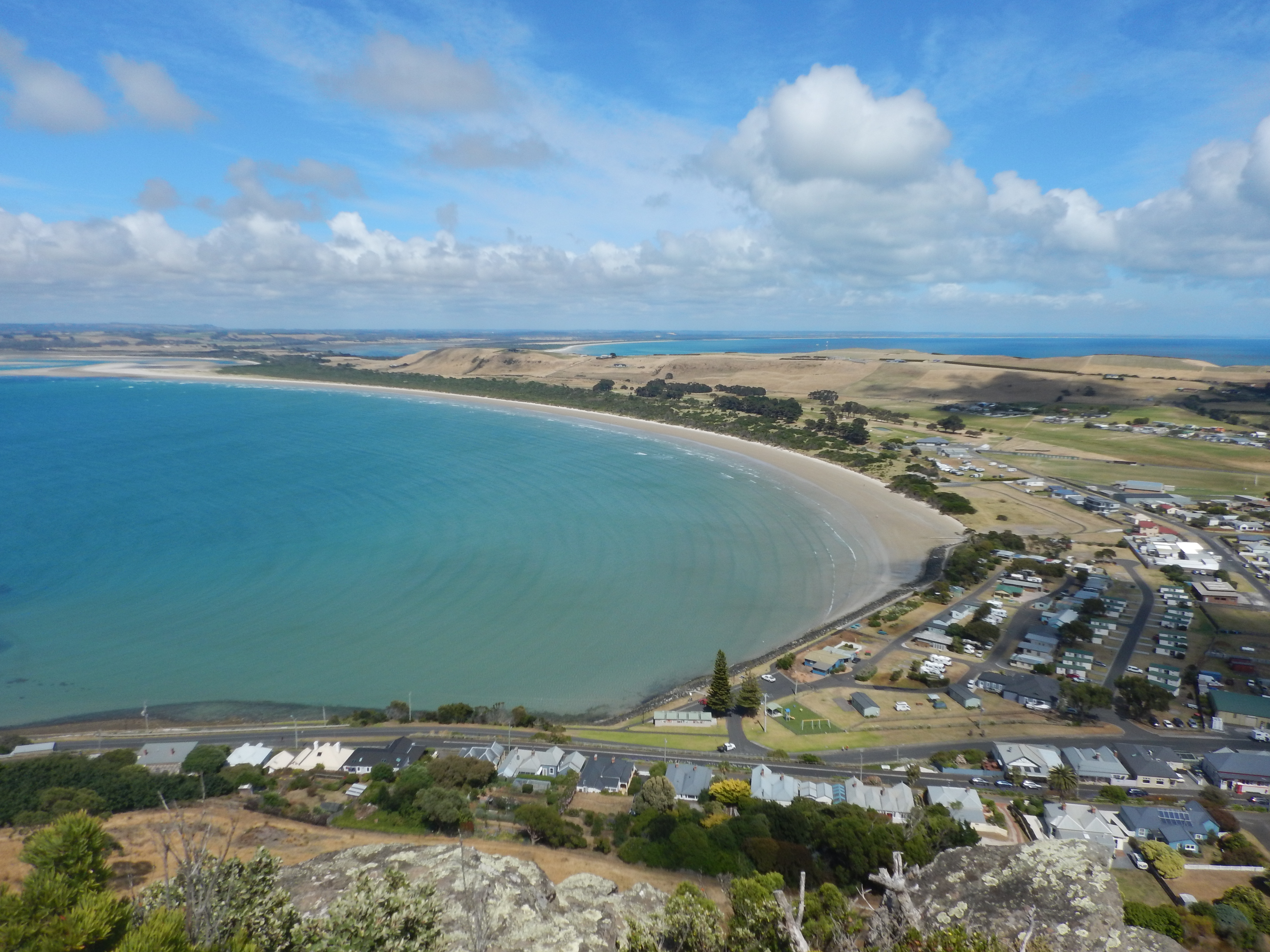
The view from the Nut
Another pleasant day in Stanley. A little cloudy today but still, enough sunshine and no hint of rain so a good day to be out and about.

Leaving our digs about 10 - showers and general faffing about - we walked up into the Main Street and found the Brown Dog Cafe, where it seemed prudent to have a coffee. Sue was there before me and had caught up on some local knowledge. Coffee quaffed, we made our way through small passages and laneways, up the early slopes of the Nut.

The Nut is what is left when the outer cone of a volcano is eroded away, leaving only the hard, inner flow chamber, long since dead and solidified as rock. It’s known as a volcanic plug but has other names in other settings. For instance, you’ve seen all those great cowboy movies in which John Wayne rides through the desert, surrounded by Indians and flat topped mountains. Those mountains are called mesas. Skinny ones are called buttes. They are volcanic plugs.

The weird thing about the Nut is that it sits on the end of an isthmus - pronounced the way someone with a lisp might say Christmas. Like a gigantic full stop, about two thirds of its sides are vertical cliffs of about fifty metres, while on the Stanley side, there is a talus slope which provides access. On the right angle, it looks like one of those raccoon skin hats Davie Crocket wore.

Stanley just sort of rests at its feet.

There are two ways for the public to climb to the top of the Nut and once there, enjoy a two km loop of the mostly flat surface. You can walk up a very steep and reasonably direct, well defined track or you can ride a chair lift. We chose the chairlift … to hell with it, we don’t have to offer excuses!

Bit of a problem. We paid our money. We stood on the painted footprints, as instructed but that were the only instructions we received. Chair arrived behind us and Sue got knocked base over apex but some home recovered and scrambled back on the chair. I was ropeable. Sue claimed no damage done so we enjoyed the ride. The view was behind us, of course, so this leg was about the thrill and exhilaration.

Unfortunately, more trouble at the top. We made the dismount okay but I asked a question and got a pretty sharpish, I thought unnecessary reply and given my anger at Sue being knocked over below, I offered what I’ll call a correction. Sue dragged me away.

It was soon forgotten. The walk around the top of the Nut offered spectacular views and the unexpected experience of walking through a quite serene forest, at one point. We had expected tracks surrounded by grass and rocks and yes, there was a fair bit of that. There were Shearwater nests, which are holes they burrow into the ground, usually amongst the grasses. Also known as Mutton Birds, a name early English sailors gave them for obvious reasons and locally as Yolanda or Moonbirds, they migrate here for the summer, from great distances - try Siberia - and live for prodigious lengths of time, well into their thirties.

We wondered about snakes and wore our gaters in cases but were told there were none. Defies reason when you imagine Shearwater’s eggs so available.

Lots of fabulous lookouts and only one decent rise in the track, it was a really pleasant walk.

Returning to the chairlift station, I detected a change in attitude and by the time we reached the base at the bottom, the operator spent some time talking with me and several times offered a genuine apology. I made a few points about the danger of complacency and we shook hands. I gave them a chance to be reasonable and they were. Fair enough.

Highfields
On the walk back to the van, we stopped and chatted with a couple tending to their garden of assorted berries. They moved here from Melbourne fifteen years ago and are on their second Bed and Breakfast venture.

A quick lunch and then we drove up to Highfield, originally built by convict labour in 1826 for the previously mentioned boss of the Van Demons Land Company in the north west of Tasmania, Edward Curr. A two story timber building then, later to be encased in bricks and mortar, it was a building that would epitomise the difference between Curr and everyone else and the indifference with which he treated convicts and aborigines. He and his wife had 15 children but not all of them lived at Highfield, being sent to England for their education ... including a three year old. It was the scene of social dinners where gossip was shared. Two of the more famous, regular diners at the Highfield dinner table were Jorgen Jorgensen and the explorer and architect Henry Hellyer. Sadly, the latter died by suicide in one of the upstairs bedrooms.

Click here to see today's photos

Highfield has a long and interesting history which I won't attempt to unpack here. The building has been carefully restored whilst still providing examples of how it was built by exposing layers of walls etc. The outbuilding, including stables and a combination chapel/classroom are in excellent condition.

Highfield sits high on a hill facing the Nut and overlooking Stanley or Circular Head, as it was known then.

Nice day.

Tuesday, 7 February 2023

MOT Tour Day 13 - Woolnorth

An early start as we had a bit of a drive to get to our tour of the Woolnorth Station to the west.

Established in 1827 when the Van Demon Land Company landed six shepherds on the point at the extreme north of the area, the property has never really escaped from the violence those same shepherds perpetrated on the aboriginal mob who lived there. After twelve months living in harmony, the appointment of a new head of VDL, Edward Curr, marked a change in approach. In the words spoken today, he was a bastard. Convicts were the lowest form of life and they were expendable. Aborigines rated lower than that and VDL men knew that anything goes, after all, Curr was also the Chief Magistrate.

The scene of the massacre
In 1828, with no apparent provocation but definite planning, the shepherds waited until the men of the tribe had gone east for the annual trading with other mobs, and stormed into the camp and abducted six teenage girls. The returning men, chased some of the sheep off the cliff at what is known locally as slaughter hill. From there, it descended quickly into a blood bath. The shepherds soon after sighted a group of elders, women and children down on the black sand beach at Cape Grim and started shooting at them but with muskets were no chance of hitting their target from 70m above. The sound of the shooting drew the men to the cliff top, where they were massacred and their bodies thrown over the cliffs to the others below. With no way out except where the shepherds waited, it was only a matter of time.

A few survived but an entire group and their lore and traditions were wiped out.

The shepherds faced no charges.

Part of the Woolnorth Wind Farm
The property operated as a sheep and dairy concern for most of its life, although sheep were woefully unsuited to the climate and landscape. They finally ended in the 1980’s. It does remain an extremely valuable dairy producing farm and one of the main reasons why the area from Woolnorth to Devonport produces 35% of Australia’s dairy products. In recent years, Woolnorth has become well known as one of Australia’s first and still leading wind farm, with Tasmanian Hydro providing a large part of the power it supplies to the grid from Woolnorth.

50% of all of Tasmania’s energy needs are sourced from wind generators.

Our tour included an up close and personal look at one of the wind towers. These particular ones are 80 metres high and have 60 metre long, carbon fibre blades. The newer generation of towers are 120 metres high and have blades that are 100 metres long.

We had morning tea in the now unused shearing shed, where our guide, Laura, told us the heart-rending tale of the massacre at Cape Grim. We travelled up to the point and the coastal scenery was spectacular. On this clear, sunny day in light winds, it was hard to imagine threat but the winds here have been measured up to 160kph and the swells can be as high as 16 metres. It is more often a dangerous place and when the wind and rain aren’t providing mayhem, the Tiger Snakes who are prolific in the area, are happy to raise the threat level higher.

Restored bond store house
Hard to imagine on a day like today. Looking down on the black sand, it was even harder to imagine the cruelty handed out to a peaceful and generous host.

We have heard some disturbing tales in our travels and no doubt more await us at places like Port Arthur but this was disgusting.

Good tour. Laura was an excellent guide with lots of information and lots of courage.

This afternoon we had a late afternoon stroll around Stanley, with its old and well preserved buildings which have held many lives and been called on for many uses. We spoke with one couple who have bought what was once the bond store opposite one of the wharves. They have been three years on the task of not just bringing it back to a former glory but enhancing it in the process. All of the houses along two terraces look back across the wide bay to Rocky Cape, which is maybe 18 kms to the south east.

Click here to see today's photos
Of course, behind them is the imposing rocky mesa of The Nut, a volcanic plug remnant. We haven't explored it but like most tourists, its the reason we came. Tomorrow maybe.